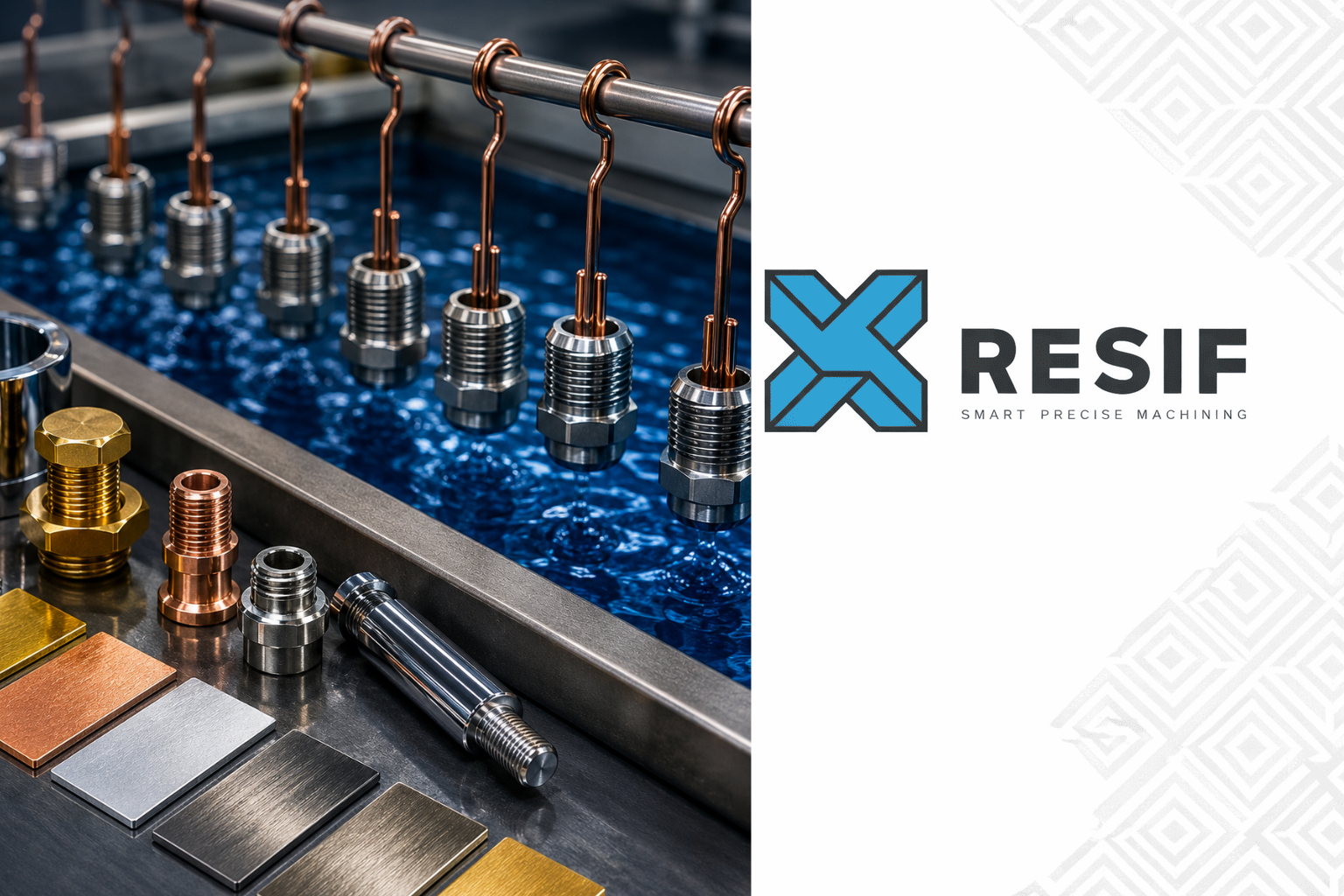
Electroplating is widely used in industry to improve the performance of metal products. Electrochemical deposition of metals makes it possible to protect parts from corrosion, increase their wear resistance, improve electrical properties and give the surface a decorative appearance. Modern technologies ensure high accuracy of coating formation and make it possible to obtain layers with a given thickness and physico-chemical properties.
Electroplating is in demand in the manufacture of new products, repair of equipment and restoration of worn parts. The method is used in almost all industries due to its high reliability and the ability to process parts of complex geometry.
What is electroplating?
Electroplating is a thin layer of metal formed on the surface of a product as a result of an electrochemical process. Deposition occurs in the electrolyte under the action of direct electric current, which ensures a strong adhesion of the coating to the base metal.
Unlike paint and varnish materials and spraying, the galvanic layer becomes part of the surface of the product and has stable performance characteristics.
The principle of coating formation
The process is based on the transfer of metal ions from the electrolyte to the surface of the part. The workpiece is connected to the negative pole of a DC power source and performs the function of a cathode. The anode is a coating metal or an inert electrode, depending on the technology. Under the influence of an electric current, ions are restored and evenly deposited on the surface of the part.
The quality of the coating is determined by the composition of the electrolyte, the current density, the temperature of the solution, the processing time and the thoroughness of surface preparation.
The main functions of electroplating
Electroplating solves several technical problems at once:
- protection of metal from corrosion;
- increasing the wear resistance of parts;
- increased surface hardness;
- reduction of the coefficient of friction;
- improved electrical conductivity; increased solderability;
- restoration of geometric dimensions of parts;
- improvement of decorative characteristics of products.
The choice of coating depends on the operating conditions, reliability requirements and purpose of the product.
How is electroplating performed?
The technological process includes a set of sequential operations, each of which affects the durability and quality of the coating.
The principle of the electrochemical process
During processing, a constant electric current passes between the anode and the cathode. Metal ions move through the electrolyte and form a dense metal layer on the surface of the part. Special electrolytes and strictly defined deposition modes are used for each metal.
Main equipment
The production site includes:
- galvanic baths;
- DC rectifiers; electrolyte filtration systems;
- heating equipment; solution mixing devices;
- suspension devices and drums;
- flushing baths; drying plants;
- ventilation systems.
Modern automated lines ensure the stability of technological parameters and high repeatability of results.
Surface preparation
Preparation is one of the most crucial stages of production. Even minor contamination can lead to reduced adhesion and defects.
The preparation sequence includes:
- mechanical cleaning;
- grinding or polishing;
- chemical degreasing;
- electrochemical degreasing;
- etching;
- surface activation;
- intermediate flushes.
The main stages of the technological process
The standard processing scheme includes:
- Acceptance of products.
- Cleaning the surface.
- Degreasing.
- Etching.
- Flushing.
- Surface activation.
- Electrodeposition of metal.
- The final flushing.
- Passivation or additional processing.
- Drying.
- Coating quality control.
The main types of electroplating
Galvanizing
Zinc coating is one of the most common ways to protect steel products from atmospheric corrosion. Zinc acts as a protective layer and provides electrochemical protection of the base metal.
Advantages:
- high corrosion resistance;
- affordable cost;
- the possibility of passivation;
- long service life.
Application areas:
- fasteners;
- building structures;
- automotive parts;
- industrial equipment.
Nickel plating
Nickel coatings are characterized by high hardness, resistance to moisture and attractive appearance. Used for:Nickel coatings are characterized by high hardness, resistance to moisture and attractive appearance.
Used for:
- protective and decorative finishing;
- improving wear resistance;
- surface preparation before chrome plating;
- restoring the details.
Chrome plating
Chrome coatings are divided into decorative and hard ones.
Basic properties:
- high surface hardness;
- minimum coefficient of friction;
- resistance to mechanical wear;
- resistance to aggressive environments.
Hard chrome plating is widely used to restore the dimensions of shafts, rods and other critical parts.
Copper plating
Copper coatings have high electrical conductivity and ductility.
The main directions of application:
- intermediate layer before nickel plating;
- printed circuit boards;
- electrical contacts;
- restoring the dimensions of the parts.
Tinning
Tinning involves applying a layer of tin, which provides good solderability and protects the surface from oxidation.
The coating is used in the electrical industry, the manufacture of electronic components and food equipment.
Silvering
Silver is characterized by the highest electrical conductivity among industrial metals.
The coating is used for:
- contact connections;
- high-frequency equipment;
- instrument engineering;
- radio engineering devices.
Gilding
The gold coating is characterized by high chemical resistance and minimal contact resistance.
Main application areas:
- microelectronics;
- aviation equipment;
- telecommunication equipment;
- precision electrical connections.
Cadmization
Cadmium coatings are resistant to the effects of the marine atmosphere and are mainly used in the aviation industry and specialized mechanical engineering. The use of the technology is limited by current environmental requirements.
Special types of coatings
To solve specialized tasks, the following are used:
- nickel-phosphorus;
- nickel-boron;
- tin-bismuth;
- multi-layer protective coatings;
- combined systems with subsequent passivation.
Comparison of different types of coatings
| Type of coverage | Corrosion protection | Wear resistance | Electrical conductivity | Main purpose |
| Zinc | High | Average | Low | Steel protection |
| Nickel | High | High | Average | Protective and decorative coatings |
| Chrome | Very high | Very high | Average | High-load operation |
| Copper | Average | Low | Very high | Electrical engineering |
| Tin | Good | Average | High | Electronic components |
| Silver | Average | Average | Maximum | Electrical contacts |
| Gold | Very high | High | Very high | Precision electronics |
Where electroplating is applied
lectroplating technologies are used in almost all manufacturing industries.
The most common destinations:
- Mechanical engineering;
- automotive industry;
- aviation industry;
- instrument engineering;
- radio electronics;
- production of medical equipment;
- oil and gas equipment;
- energy engineering;
- manufacture of fasteners.
In many cases, electroplating is a mandatory step in the manufacture of products, as it ensures that products meet the requirements for corrosion resistance, resource and reliability.
Possible defects in electroplating
Violation of the technology may lead to deterioration of the performance characteristics of the coating.
The main types of defects
The most common are:
- peeling of the coating;
- porosity;
- subgar;
- surface roughness;
- uneven layer thickness;
- spots;
- darkening;
- local corrosion.
Причины возникновения дефектов
The main causes of defects:
- insufficient surface preparation;
- violation of the current density regime;
- electrolyte contamination;
- non-compliance with the temperature regime;
- errors when washing parts;
- violation of processing time.
Compliance with technological parameters can significantly reduce the likelihood of marriage.
How to choose the appropriate type of coating
The choice of technology is determined by the operating conditions of the product and the requirements of regulatory documentation.
When selecting the coating, the following factors are taken into account:
- part material;
- environmental conditions;
- exposure to moisture and chemicals;
- mechanical loads;
- Operating temperature;
- electrical conductivity requirements;
- decorative surface properties;
- required service life;
- economic efficiency.
For critical products, multilayer coatings are often used, combining the advantages of several metals.
Advantages of professional job performance
The quality of the finished coating directly depends on compliance with technological regimes and the use of specialized equipment.
Professional electroplating provides:
- stable coating thickness;
- high adhesion to the base metal;
- uniform deposition of the layer;
- compliance with the requirements of the technical documentation;
- quality control at all stages of production;
- high corrosion resistance and long service life of the products.
The use of modern automated lines and constant monitoring of process parameters make it possible to obtain coatings with predictable performance characteristics even when processing complex shaped parts.
Conclusion
Electroplating is widely used in modern industry to protect metal products from corrosion, increase their wear resistance, improve electrical performance and extend service life. The choice of technology depends on the material of the part, the operating conditions and the requirements of the design documentation. Electroplating allows you to solve a wide range of production tasks, and professional work performance ensures stable coating quality and compliance with established standards.
The effectiveness of the protective coating is determined not only by the chosen technology, but also by the correct selection of the processing method for a specific product. Of the considered types of electroplating, RESIF performs galvanizing of steel products, as well as provides services for applying anodic oxide and chemical oxide coatings to aluminum alloys, hard anodizing of aluminum and chemical passivation of stainless steel products. The complex of applied technologies allows you to choose the optimal solution, taking into account the material of the part, the operating conditions and the requirements of the design documentation.