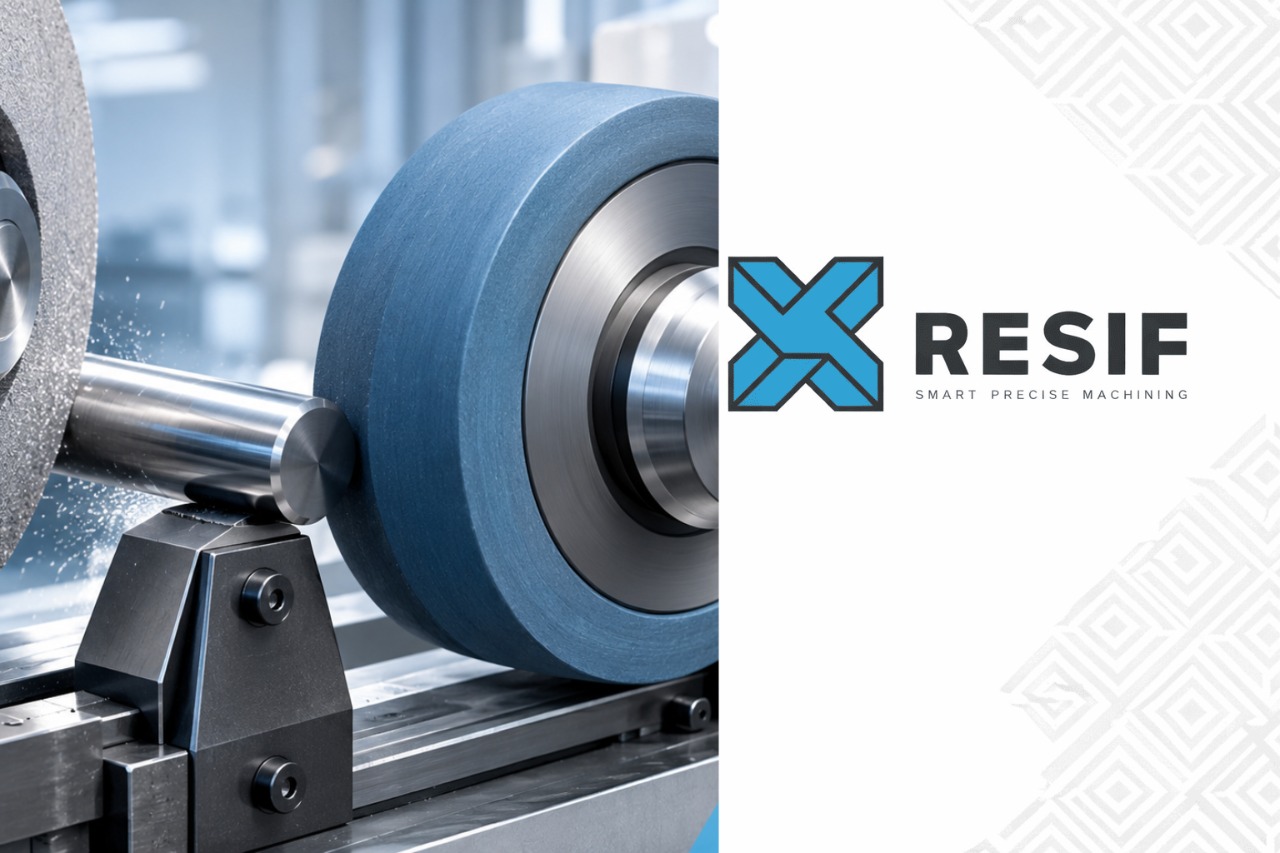

The manufacture of components for lower limb prosthetics requires high precision in mechanical processing, stability of geometric parameters, and adherence to technical documentation. The compatibility of components, the reliability of connections, and the performance of the prosthetic structure depend on the quality of individual parts.
The development of local production in Belarus creates opportunities to reduce dependence on foreign supplies, simplify interaction with manufacturers, and build an own technological base.
What components can be manufactured using mechanical processing?
Mechanical processing makes it possible to produce parts of various geometries with specified dimensions, tolerances, and surface characteristics. The list of possible products is determined by the design of the prosthesis, technical requirements, and the technological capabilities of production.
Potential manufacturing items include:
- Connecting elements and adapters — parts for coupling components of the prosthetic system.
- Housing and support elements — components with holes, grooves, threads, and other design features.
- Fastening and adjustment parts — elements for fixing and adjusting individual components.
- Shafts, axles, and bushings are parts that require adherence to tolerances for dimensions, alignment, and mounting surfaces.
- Custom components based on drawings are products designed for a specific structure.
The feasibility of manufacturing a specific part is determined after analyzing the design documentation and the customer’s requirements.
Technical requirements for the manufacture of parts
When manufacturing components for prosthetic systems, it is important to take into account not only the nominal dimensions but also the functional requirements for each part.
- Geometric accuracy. Deviations in diameters, concentricity, perpendicularity, and surface alignment can hinder assembly and affect the performance of joints. Tolerances are set taking into account the purpose of the part and the requirements of the drawing.
- Surface roughness. The parameters of the machined surface affect contact interaction, friction, wear, and the quality of component mating.
- Strength and durability. When selecting a material and technology, the nature of the loads is taken into account, including bending, torsion, and cyclic loading.
- Stability of characteristics. In mass and small‑batch production, it is important to ensure the repeatability of dimensions and other controlled parameters.
The material, tolerances, hardness requirements, and protective coatings are determined individually. A rational choice of technology makes it possible to ensure the required quality without unnecessarily complicating the production process.
Stages of technology development and manufacturing
Analysis of technical documentation
For a preliminary assessment, a drawing, specification or 3D model, if available, material information and control requirements are required. The volume of the batch and the need to produce a prototype are also taken into account.
Selection of processing technology
The technological route defines the sequence of operations, the methods of locating and securing the workpiece, the tools used, and the cutting modes.
When developing the process, the accuracy of the setup, the rigidity of the technological system, and possible deformations are taken into account. For complex parts, several sequential operations may be required.
Production of a prototype
The prototype allows you to test the selected technological process and assess the feasibility of the specified parameters. Based on the measurement results, the methods of processing, securing, and control are adjusted if necessary.
If the part is intended for assembly with other components, the correspondence of the mating dimensions is additionally checked.
Quality control
Depending on the requirements of the drawing, the inspection may include measuring dimensions, checking tolerances for the shape and location of surfaces, inspecting threads, fits, and roughness.
If necessary, the preparation of measurement reports and other accompanying documentation is coordinated.
One‑off and small‑scale production
When introducing new components, it is often necessary to start by manufacturing one or more parts, verify the design solution, and then proceed to producing a batch.
Single‑unit production is suitable for prototypes, design verification, and the manufacture of individual components. The main focus is on technological development and compliance with the drawing requirements.
Small‑scale production involves producing a limited number of identical parts. In this case, it is important to ensure the repeatability of characteristics, rationally organize equipment changeovers, and determine the required scope of control.
Preliminary technological assessment helps to identify complex operations, determine the need for tooling, and agree on the manufacturing conditions.
The advantages of local production in Belarus
Dependence on foreign suppliers can complicate procurement planning, the re‑manufacturing of parts, and the introduction of design changes. Domestic production creates opportunities for closer interaction between the customer and the manufacturer.
The advantages of localization include:
- Reducing the logistics chain for Belarusian customers;
- simplifying technical interaction with production;
- the possibility of organizing the production of prototypes;
- coordinating changes in the design documentation;
- planning subsequent batches taking into account production capabilities.
The actual timeframe and cost depend on the complexity of the part, the availability of materials, the volume of the order, and the control requirements.
Manufacturing parts according to individual drawings
A company specializing in mechanical processing for over 30 years is exploring a new direction — the production of components for lower limb prosthetics in Belarus. The project includes the development of technological processes, the production of prototypes, and the preparation of a production base.
The accumulated experience working with customers from Belarus, Russia, and Europe allows the company to leverage its expertise in single‑piece and small‑batch production when introducing new products.
The possibility of manufacturing specific components is determined after an analysis of the technical documentation, material requirements, accuracy, and control specifications.
Stages of project development and prospects for cooperation
Today, our production of components for lower limb prosthetics in the Republic of Belarus is in the stage of active development and scaling up. We are focused on creating a flawless product, so currently all our resources are directed towards producing trial batches and maximally improving the production technology.
Our goal is to launch serial production of in‑demand components and parts to create a permanent stockpile in the warehouse. This will allow the Belarusian market to quickly receive high‑quality products without long waiting times and overpayments for imports.
The unique production of individual custom‑made parts is a long‑term development prospect for our company. Today, we are inviting prosthetic workshops, medical centers, and industry experts who are ready to be the first to assess the quality of our products to collaborate.
How you can get involved with the project right now:
- Become an expert tester: we are open to dialogue with professionals and are ready to provide test samples from trial batches for feedback and joint product refinement.
- Discuss the terms of future partnership: contact us to express your interest and be among the first to learn about the start of official shipments.
We are creating a solid foundation for the Belarusian prosthetics sector and strive to ensure that every component meets the highest quality standards.